Do You Need a Video Editor or a Motion Designer?
Answers video editor vs motion designer
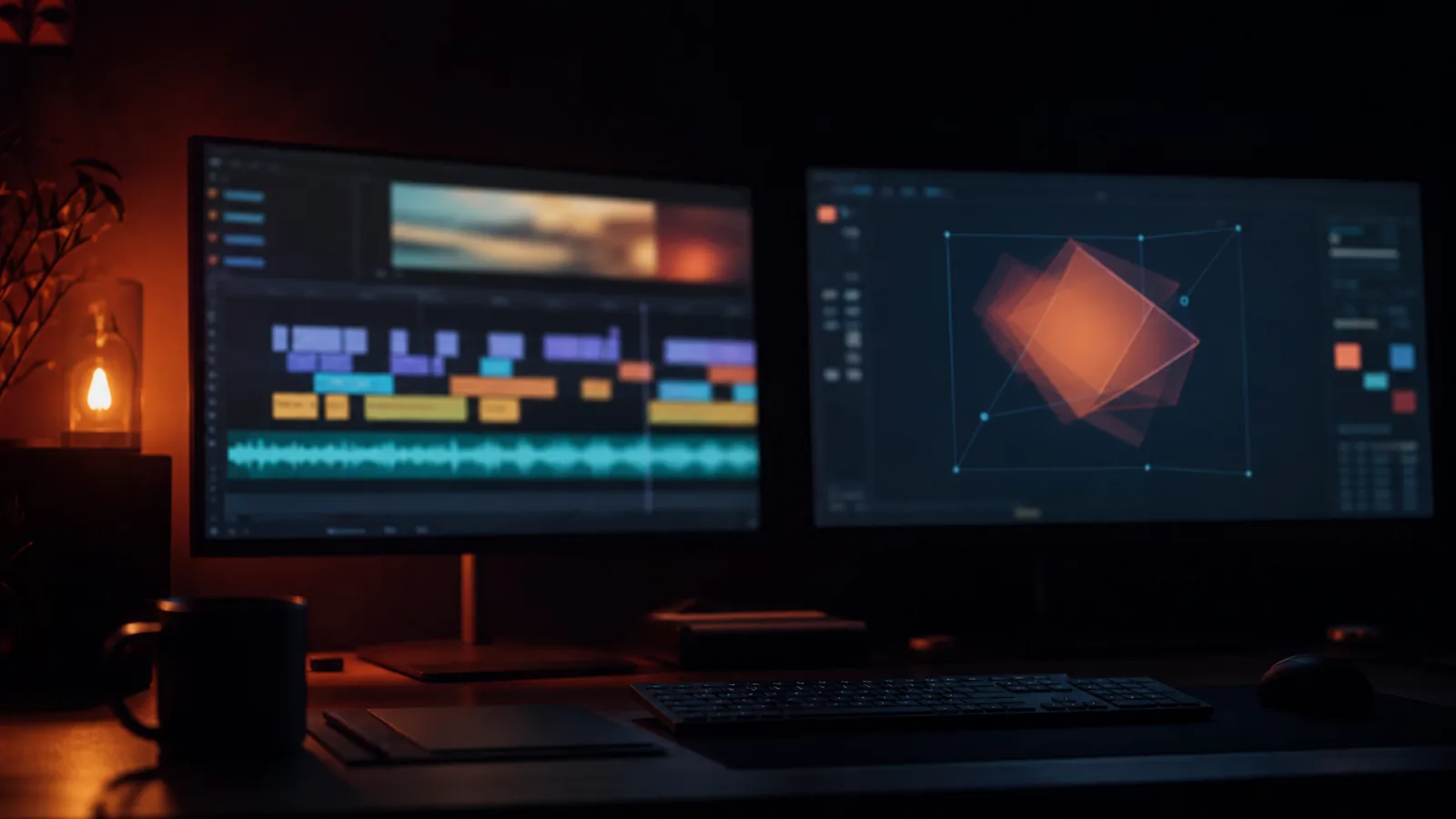
The two titles get used interchangeably on job posts and on service pages, and they describe different work. Knowing which one your project needs is worth real money, because hiring the wrong one is how a job doubles in cost after the first delivery.
The short difference
An editor takes existing footage and decides what the viewer sees, in what order, for how long. The raw material is shot. The decisions are about selection, pace and structure.
A motion designer makes things that were never in front of a camera. Animated type, logos, transitions, tracked graphics, diagrams, three-dimensional elements. The raw material is a design system, and the decisions are about how things move.
The test: how much of the finished runtime was shot?
Under one hundred per cent of it, and the percentage tells you the answer.
- Ninety per cent shot, ten per cent graphics. An editor's job, with a graphics pass. Titles and an end card.
- Sixty per cent shot, forty per cent graphics. Both jobs, and they should be quoted separately, because they fail differently.
- Twenty per cent shot, eighty per cent graphics. A motion design job with some footage in it. An editor hired for this will produce something that looks underdesigned, and it is not their fault.
Where things go wrong
Hiring an editor for a graphics-heavy piece. The result is usually a competent cut with weak furniture: a plain lower third where an animated one was needed, a static logo where a reveal was expected. Nobody is at fault. The skill is different.
Hiring a motion designer to cut. The result is usually over-animated: movement where the pace should have come from the cut, and a piece that feels slower than its runtime because every transition is doing work the edit should have done.
Assuming one person covers both, for the price of one. Some people genuinely do both, and they should be paid for both. A single rate that covers editing and motion design is either too high for the edit or too low for the graphics, and it becomes apparent which, late.
How to tell which you need
Write the film's beats as a list and mark each one as shot or made. Then count.
If the made beats are titles, an end card and a logo, you need an editor, and the graphics are an afternoon.
If any made beat carries part of the argument, meaning the film would not make sense without it, you need a motion designer, and the edit should be planned around where those beats land.
What this means for a quote
Ask for the two numbers separately, even if you hire one person. Separate numbers tell you which half of the job is expensive, and they make it possible to cut scope without cutting quality: sometimes the answer is fewer graphic beats, not a cheaper designer.
On this site both disciplines are listed, and the services section names which is which. If you are unsure which side of the line your project falls on, describe the beats and the contact page will tell you honestly which one it is, including when the answer is that you need someone else.