Storage for Editors: What to Keep, What to Archive, What to Bin
Answers how to store video project files
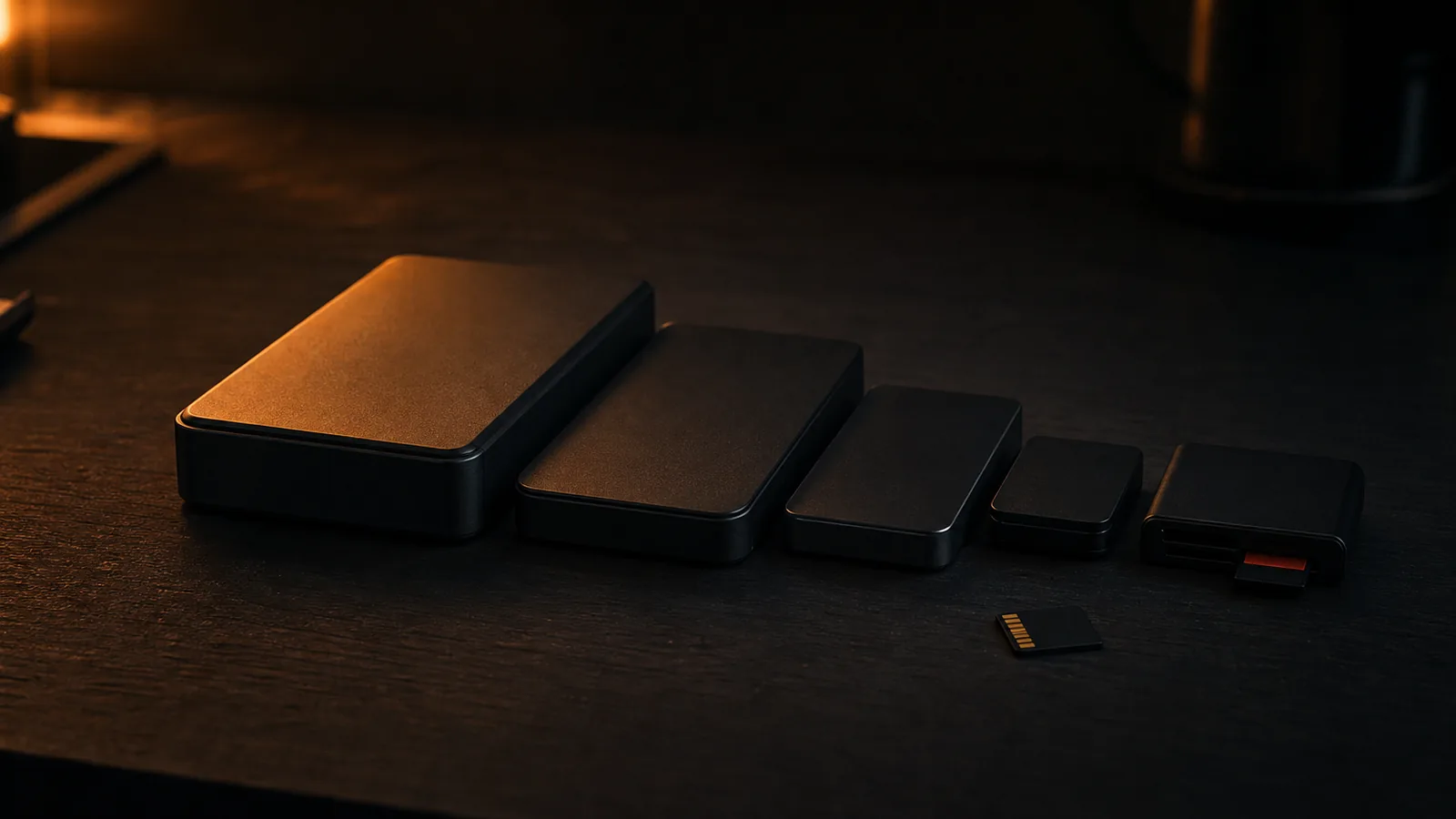
The drive always fills up, and buying another one always postpones the decision rather than making it. What actually fixes it is a rule about what gets kept, and the rule has to be decided before the job rather than during it.
Three tiers
Tier one: working. Fast, local, and only ever holds what is being cut right now. If a project is not being touched this month, it does not belong here.
Tier two: online archive. Slower, cheaper, bigger, and reachable without getting up. Everything finished in the last year or two, so a client asking for a change can be answered the same day.
Tier three: cold. Drives in a drawer or in the cloud, ideally more than one, ideally not in the same building. Anything older than the window in tier two, plus the masters.
The mistake is putting everything in tier one, which is what happens when nobody decides.
What has to stay, and for how long
The camera originals for as long as the client might ask for a re-cut. That window is contractual as much as practical: if the agreement says a year, it is a year. After that it is the client's responsibility and saying so in writing is the whole point of the clause.
The finished masters. Forever, in as many formats as were delivered, in two places. This is the only irreplaceable thing in the whole job.
The project file. Alongside the masters. It is small and it is the difference between a re-edit and a reshoot.
The graphics. Project files and any assets that were built rather than shot.
What is safe to delete the day the job is signed off
Proxies. Regenerable in an hour and usually the largest single thing on the drive. Delete them first, always.
The cache. Regenerable by definition.
Renders and intermediate exports. The final master exists; these do not need to.
Audio mixes and stems, once they are inside the delivered master, unless there is a reason somebody might want an isolated dialogue track later. On brand work with a media agency, that reason often exists.
The selects and the notes. Counter-intuitive, but a client's notes on a finished job are only useful for a dispute, and disputes have their own record.
The two rules that prevent the real disasters
A backup is only a backup if it has been restored. Once a quarter, pick a job from a year ago and try to open it. The drives that fail are the ones nobody looked at.
Never one copy for more than an hour. Card to two places before the card is formatted, and the two places are not two folders on the same drive. This is the only mistake in the whole list that cannot be undone.
What this means for a client
Ask how long the footage will be held and where. A supplier who says "as long as you need" without a number has not decided, and the answer when you ask for a re-cut in three years may be that the drive was formatted.
On my own jobs the footage and the project sit online for a year, and the masters are kept indefinitely. That window is worth putting in writing at the start, which is what the brief and the handover conversation covers along with everything else.