Where to Get LUTs That Are Actually Good
Answers where to download free LUTs
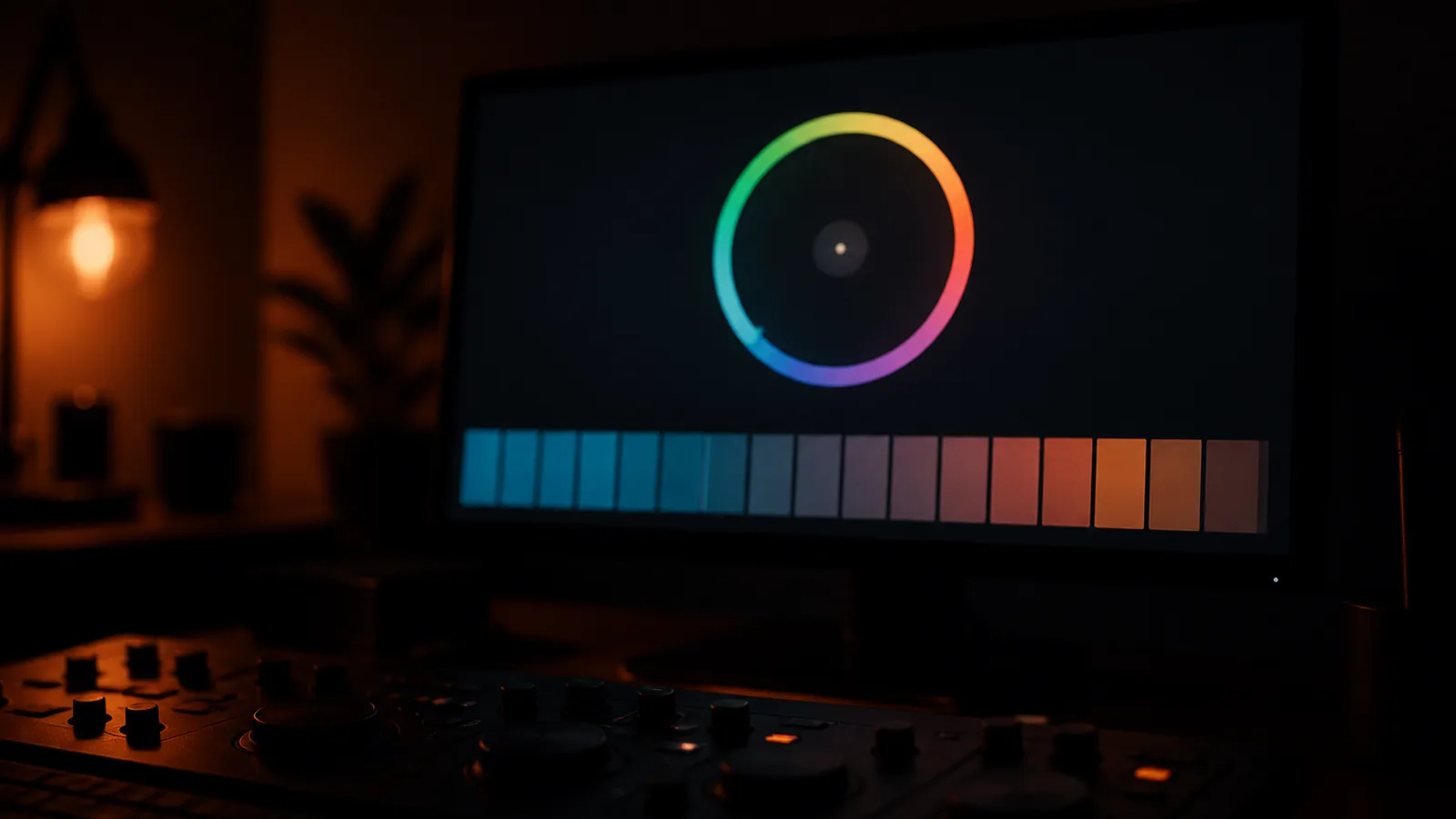
A LUT is one of two quite different things, and confusing them is how footage gets wrecked.
A technical LUT converts one known state to another: log to Rec.709, or one camera's colour science to another's. It is a translation, there is a correct answer, and the camera maker supplies it.
A creative LUT is a look. Somebody graded a shot of theirs, exported the transformation, and sold or gave it to you. It assumes their footage, their light and their exposure.
Almost every disappointment with LUTs comes from applying the second kind at full strength to footage the first kind was needed for.
The test a creative LUT has to pass
Apply it at a hundred per cent and look at three things:
- Do the blacks stay black? If the dark areas go blue, brown or milky, the LUT is crushing or lifting and you will fight it in every shot.
- Do skin tones survive? If a face goes orange or grey, it is not for your material.
- Is the white point still neutral? If white areas are tinted, the whole frame has a cast and the client will notice the room, not the mood.
A good creative LUT passes two of the three on unconverted footage. Pass it three and you have found something worth keeping.
How to use one properly
Never at a hundred per cent. A well-made look is usually right between twenty and sixty per cent, dialled in per shot.
After normalisation, not instead of it. Set your blacks and whites first, match the shots to each other, and only then apply a look. A LUT on ungraded footage is being asked to fix exposure and colour at the same time.
As a reference, not a destination. The most useful thing a LUT pack gives you is a direction. Matching it by hand teaches you the grade; applying it teaches you nothing.
Where to actually get them
Free packs worth downloading:
- Presetpro's roundup of free grades collects cinematic and film-emulation looks in one place, which saves searching
- PremiumBeat's free cinematic pack is a small, well-made set of thirteen, and it is the kind of pack to learn from rather than apply
The ones worth paying for are the ones documented against specific footage: a particular camera, in particular light. If a seller cannot tell you what the LUT was designed for, it was designed for a screenshot.
The ones to avoid entirely: any pack delivered as a file with no documentation, anything bundled with a crack, and anything that claims a single LUT serves every camera and every genre. That last one is a description of a filter, not a grade.
The licensing point, which is not a formality
A LUT is someone's work, and the licence governs where the output can be used. Some free packs are free for personal use only. On a paid client job that matters, and it is the client's exposure, not yours.
Check before you deliver, and keep a note of where each look came from. If a client ever asks what was used, having the answer is worth more than the ten minutes it took to write down.
What this means in practice
Colour grading is a service on its own, and a pack of LUTs is not a substitute for it any more than a preset is a substitute for a mix. If a film needs a look rather than a filter, that is the finishing pass, and the LUT, if there is one, is the starting point rather than the result.