Skin Tones Are the Whole Grade
Answers how to grade skin tones
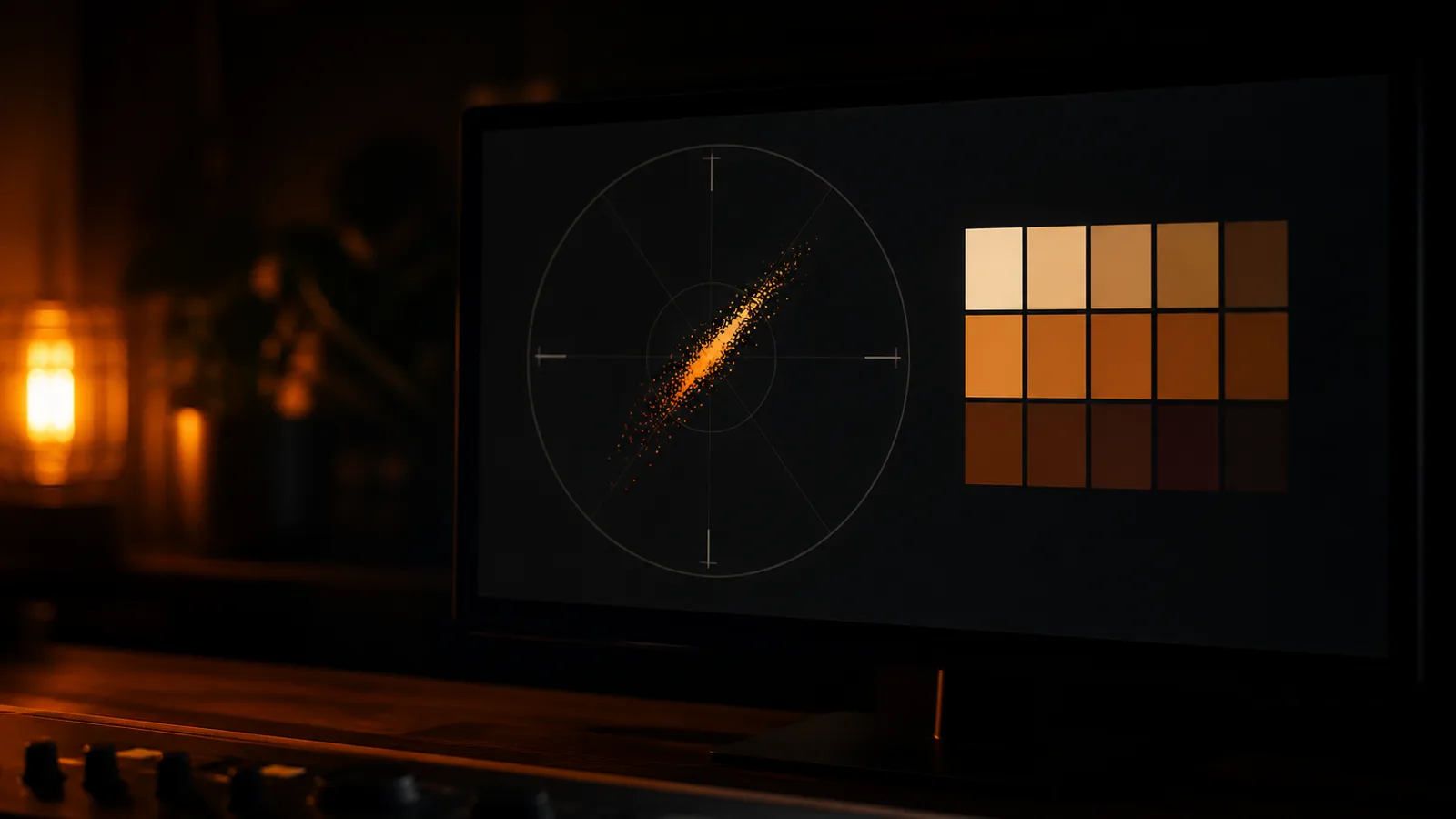
Ask an audience what is wrong with a grade and they will rarely say skin. They will say something vaguer: it looks off, it looks cold, it looks like a different film. Almost always it is the face.
The reason is that faces are the one thing in a frame our eyes have an absolute reference for. We have looked at faces in every light, all our lives, and we know when one is wrong without knowing how. A blue sky that leans green goes unnoticed. A cheek that leans green is the only thing anyone sees.
Where skin should sit
On a vectorscope, skin runs along a line from red towards yellow, usually called the skin tone line. Where it sits along that line depends on the person and the light, and getting it exactly right is less important than getting it the same from shot to shot.
That consistency is the whole job. A scene can be warm or cool as a choice. It cannot be warm on one cut and cool on the next, on the same person, from the same scene.
The four things that break it
Mixed light. A window on one side and a warm practical on the other, and the face is two colours. Fix what you can with a secondary rather than trying to correct the whole frame, or you will trade a skin problem for a wall problem.
Auto white balance. One of the most destructive settings in a camera, because it changes the reference between shots, so nothing is consistent to grade against. Fix the white balance on the day.
Saturation pushed too far. Skin goes orange, then red, then plastic. If the grade needs the saturation up to feel lively, the problem is contrast, not saturation.
A look applied before the match. A teal-and-orange preset over unmatched footage puts two different people in two different skins.
A working method
Pick a hero shot and grade it properly. The one with the best light and the most screen time. Take your time. This is the reference, and everything else gets matched to it.
Use a still, not a scope, for the match. Keep the hero on one side of the screen and the shot you are matching on the other, and adjust until they agree. Watching numbers agree is not the same as watching faces agree.
Isolate the face with a qualifier when a global move would hurt the room. A small secondary on the skin, moved a few points, is usually enough, and it leaves the rest of the frame alone.
Check on a phone and on a second monitor. A grade that looks right on a wide-gamut screen and wrong everywhere else is a grade built for one room.
The uncomfortable conclusion
There is no look that works on bad skin. Directors ask for moods, and the moods are achievable, but they are built on top of consistency rather than instead of it. Get the faces agreeing first and half of the "cinematic" is already there.
If a film is being judged on how it feels rather than what it shows, the finishing pass is where that happens.